
The Part of Sales You Can’t Automate
You hear a lot about sales and marketing. Funnels, CRMs, ideal customer profiles, lead generation, conversion rates, messaging, campaigns. There are a lot of tools, strategies and systems out there designed to help us do it better.
But after a recent Sales workshop at Edmonton Unlimited, the conversation kept going back to something much simpler: at some point, you actually have to talk to people.
And sometimes the biggest thing standing between you and your next customer isn’t your product, your pitch deck or your marketing budget. Sometimes it’s just getting out of your comfort zone and making the call.
Start by getting specific
One of the exercises during the workshop was almost ridiculously simple:
Write down the number of people you want to talk to and how you are going to do it.
Not “I need to spend more time on sales” or “I should probably do some business development.” How many people are you going to contact today? How many conversations are you trying to have? How many meetings would you like to book?
There was also a challenge to think about what happens if you don’t do it. What does another week of avoiding those conversations actually mean for your business?
It’s an interesting exercise because we can spend a lot of time working around sales. We update the website. Tweak the deck. Research prospects. Rewrite the email. Maybe rewrite it one more time. All of those things can have value, but they can also become really convenient ways of avoiding the thing that makes many of us uncomfortable: asking someone for their time and, eventually, their business.
The more you think, the more you doubt, the more you doubt, the more you don’t do, the more you don’t do, the more you think… and the cycle will continue.
Your customer probably doesn't want what you're selling
The drill-bit analogy came up during the workshop, and there’s a reason it continues to be used.
Someone buying a drill bit doesn’t really want a drill bit. They want a hole. Except, if you keep going, they probably don’t really want the hole either. They want to hang a picture. And maybe they want that picture up because they’re having friends over, or because they’ve finally finished a room, or because they want their house to feel more like home.
That’s where sales and marketing start to get interesting.
What are people really buying from you? Time? Confidence? Convenience? Revenue? Peace of mind? The ability to get something off their plate? The opportunity to look good to their boss?
Features matter, particularly in B2B sales where there may be multiple decision-makers, budgets, procurement processes and very real KPIs involved. But B2B buyers are still people. Trust matters. Relationships matter. Fear of making the wrong decision matters. So does confidence that the person sitting across from them actually understands the problem they’re trying to solve.
That feels obvious when you say it out loud. It’s surprisingly easy to forget when we’re writing our own marketing copy.
Sales conversations are also marketing research
This was another good reminder from the session. Sales and marketing shouldn’t live in completely separate worlds.
Every sales conversation gives you information you can use in your marketing. What words does someone use to describe their problem? What questions keep coming up? Where do they hesitate? What do they immediately understand and what requires another five minutes of explanation? What gets them interested enough to ask another question?
Sometimes we become so close to our own businesses that we start talking about them in language that makes perfect sense to us and almost nobody else.
Talking to customers fixes a lot of that.
Before spending more money telling the market what you think it wants to hear, there is immense value in simply having more conversations and listening to what people are already telling you.
And then they actually made the calls
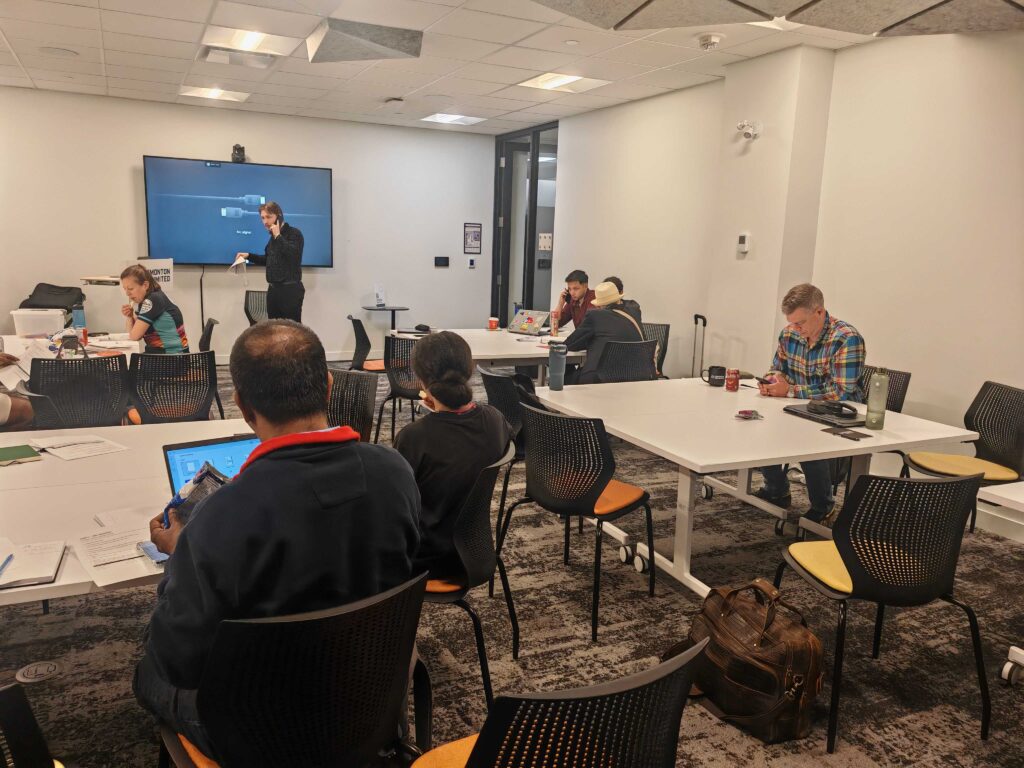
This wasn’t a workshop where everyone spent the day talking about what they should do when they got back to the office. Participants practised introductions, worked through their value propositions, rehearsed how they would ask for a meeting and then started reaching out.
The results were pretty hard to argue with.
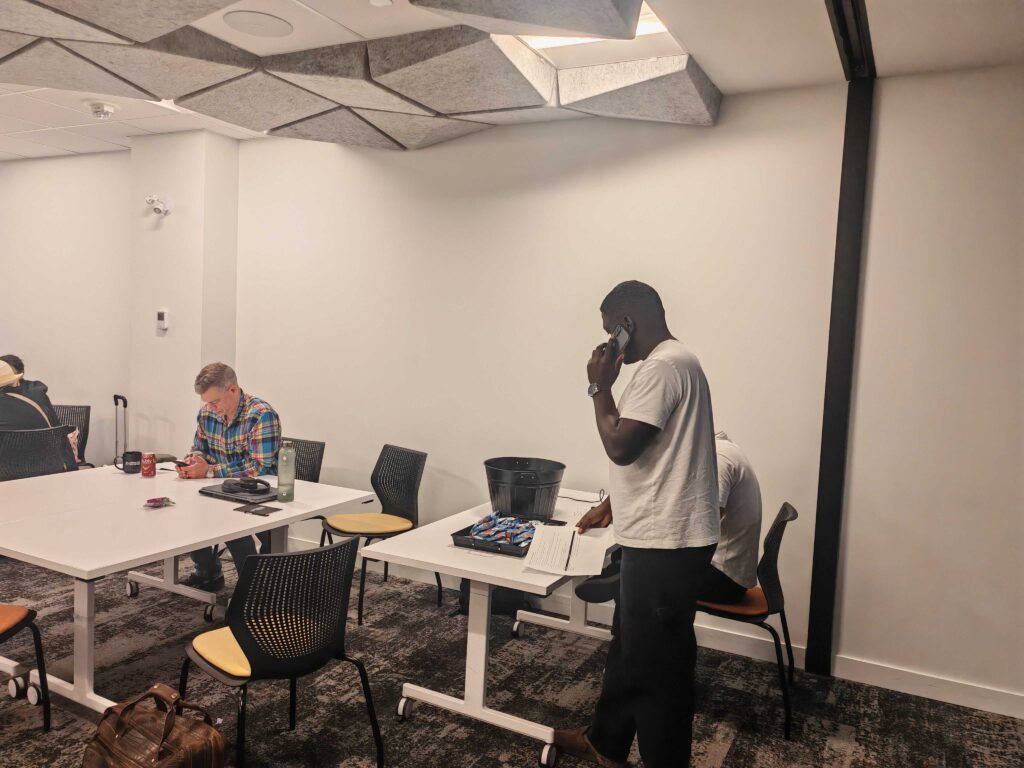
Across two teams of about 23 active participants, 109 calls were made which resulted in 40 coffee total meetings being booked.
Some people booked multiple meetings from a relatively small number of calls. Others needed more attempts. And there were also participants who didn’t make the calls and, unsurprisingly, didn’t book the meetings.
There is probably a lesson in there for all of us.
It wasn’t that everyone suddenly became an amazing salesperson. It wasn’t that every call worked. It was that people stopped thinking about doing the thing and actually did the thing.
And the more calls they made, the less intimidating the next one became.
Maybe make it simpler
If sales has been sitting on your to-do list, you probably don’t need to leave this article and build an entirely new sales strategy.
Maybe start with 10 people.
Who could you call today? Who have you spoken with recently who might be worth reconnecting with? Who might not be your customer but could introduce you to someone who is?
Figure out what you want to say, but don’t script yourself into sounding like someone you’re not. Ask questions. Listen to the answers. Pay attention to the words people use. Ask for the meeting. And then do it again.
Because there will always be another tool to implement, another piece of messaging to tweak, another prospect list to build and another perfectly reasonable reason to wait until tomorrow.
Sometimes that’s necessary.
And sometimes we just need to get out of our own way and make the call.