
Before BioWare Was BioWare
It started with three doctors, some medical education software and an idea kicked around over lunch.
Why not start a company and make video games?
As co-founder Dr. Ray Muzyka joked at a recent Threshold Impact Venture Mentoring Service (VMS) event hosted at Edmonton Unlimited: how hard could it be?
Pretty hard, as it turns out.
In conversation with Kristina Milke, General Partner at Sprout Fund and one of VMS’s founding mentors, Ray went back to the early days of building BioWare in Edmonton and the lessons that came with it: finding talent when an industry barely existed, figuring out cash flow, building culture, knowing when capital makes sense and learning how to lead as the company grew.
It was a look back at one of Edmonton’s biggest tech stories. But more importantly, it was a conversation about what founders building here today can take from it.
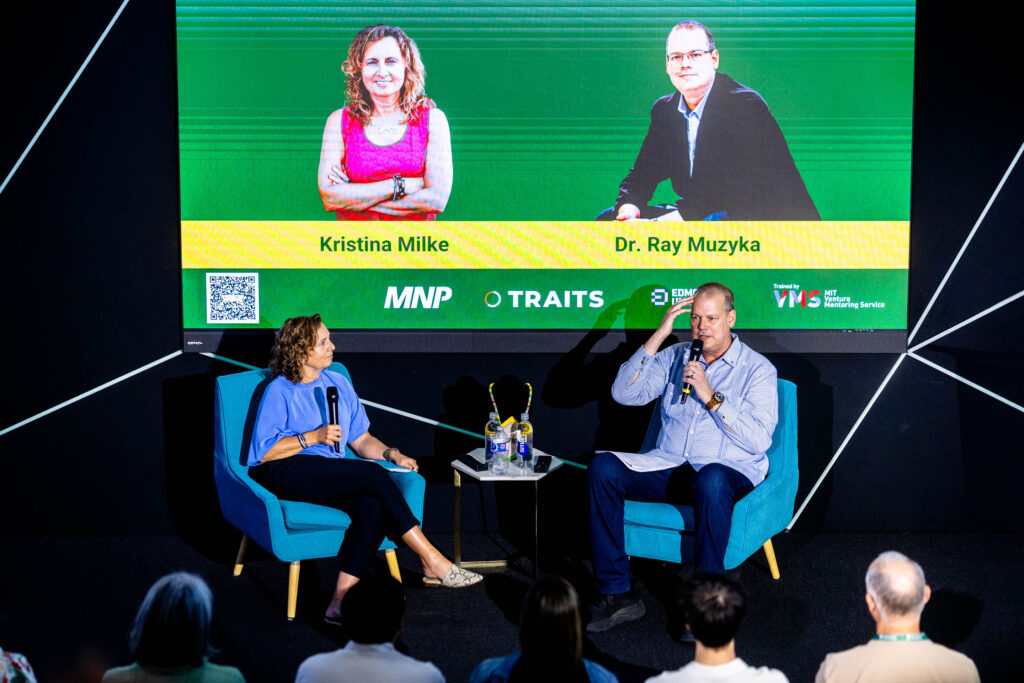
There was no playbook
When BioWare got started, there wasn’t a video game industry in Edmonton waiting for them.
There wasn’t much tech capital either.
Ray and his co-founders put in their savings, personally guaranteed loans and grew the company largely through revenue for roughly 15 years before taking outside investment.
And there were some very real moments along the way when cash was tight.
Ray recalled calling distributors to ask if a royalty or advance could arrive a little earlier because payroll was coming. That experience eventually made him obsessive about cash flow, scenario planning and understanding exactly what would happen if revenue disappeared or an unexpected expense landed.
His message to founders was simple: learn your numbers.
You don’t need to start as a finance expert. Ray certainly didn’t. But you do need to understand how your business works and where the money comes from.
That same thinking shaped his view on investment.
Raising capital gets a lot of attention in startup circles, but Ray challenged the idea that it should automatically be the goal. If you can build a strong business through customers and revenue first, you may be in a much stronger position when outside capital does make sense.
The résumé wasn’t the point
BioWare also had another challenge: how do you hire experienced video game talent in a city without a video game industry? You don’t.
BioWare’s first 60 employees had never worked on a video game before.
So they looked for something else.
Passion. Raw talent. Curiosity. Attitude. People who wanted to build something.
One future design leader was running a comic book store and organizing Dungeons & Dragons campaigns. An artist who would eventually work on Knights of the Old Republic and Mass Effect showed his portfolio on a napkin. Another early hire had never used a computer.
They weren’t hiring people who had already done the job. They were betting on people who could. And those bets helped build more than one company.
The talent developed inside companies like BioWare, Intuit and Investopedia didn’t stay in one place. People moved into other companies, stepped into leadership roles and started ventures of their own.
Today, Edmonton has dozens of game companies, including many with connections back to people who once worked at BioWare.
That’s what happens when talent compounds.
Culture isn’t a later problem
As BioWare grew, almost everything changed.
One team became several. One location became multiple studios. Roles changed. Processes that once worked stopped working. Leadership had to evolve with the company.
What couldn’t become an afterthought was culture.
Ray spoke about defining BioWare’s values early and actually using them to make decisions, from hiring to organizational structure to how employees were supported as the company scaled.
Kristina sees the opposite happen with founders she mentors. Ask about culture early on and sometimes there’s a blank look.
But if you haven’t thought about the company you want to build, how do you know who you want building it with you?
Culture isn’t something to figure out once you hit 100 employees. You’re building it from the very first hire.
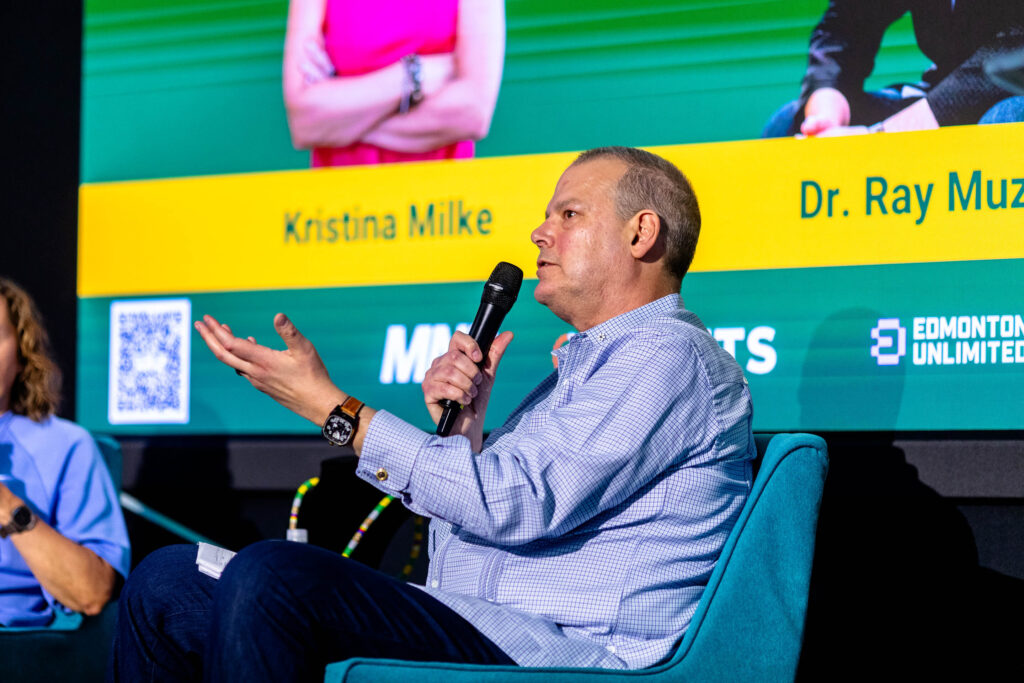
The thing Ray wishes he had
For all the lessons Ray learned building BioWare, there was something missing along the way.
Mentors.
There weren’t many people locally who had built the kind of company BioWare was trying to become. Ray found peers, read constantly, borrowed ideas from other companies and figured out plenty through trial and error. But he remembers wishing there were experienced people nearby he could turn to.
That gap is part of what eventually led him to help establish Threshold Impact VMS in Edmonton.
Modelled after MIT’s Venture Mentoring Service, VMS has been operating here since 2013, providing founders with confidential, conflict-free group mentorship from experienced business leaders.
Today, more than 100 mentors are involved, and 167 ventures have gone through the program.
But the most important part of the model might be what it isn’t trying to do.
Mentors aren’t there to make the decisions.
Founders are.
The role of the mentor is to bring experience, ask questions, challenge assumptions and offer perspectives that can help founders see the road ahead a little more clearly.
Ray summed up why that matters from his own experience: mentorship might not have changed BioWare’s outcome, but it could have helped them get there earlier, with fewer missteps and a little less pain.
What gets built next
BioWare started in a very different Edmonton.
There was no local video game industry. Tech capital was scarce. Experienced startup talent was harder to find. And there weren’t many founders who could turn around and say, I’ve been through this. Here’s what I learned.
That has changed.
Not because building a company suddenly became easy. It hasn’t.
But every company built here adds something to what comes next: experienced talent, new investors, future mentors, repeat founders and lessons that don’t have to be learned from scratch every time.
BioWare was part of building that foundation.
Now there’s another generation adding to it.
And as Kristina reminded the founders in the room, there’s proof all around us that ambitious companies can be built here.
It’s happened here.
It’s still happening here.
And there are a lot more people around the table to help this time.
That’s part of what we’re building at Edmonton Unlimited: more opportunities for founders to find the people, perspectives and support that can help them keep moving.
Because before BioWare was BioWare, it was an idea too.
Building something in Edmonton? Explore our founder programs and resources.