As Edmonton’s life sciences sector continues to grow, so does the need to close capital gaps in a crucial field that’s working to translate biological breakthroughs into scalable medical solutions.
Life sciences is one of the most significant economic opportunities in Edmonton. The numbers highlight just how quickly the sector is growing locally and why it’s attracting attention from investors well beyond our region.

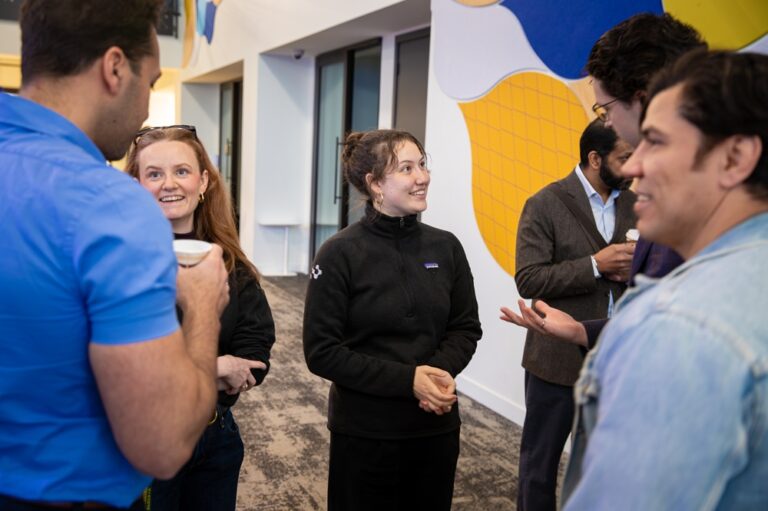
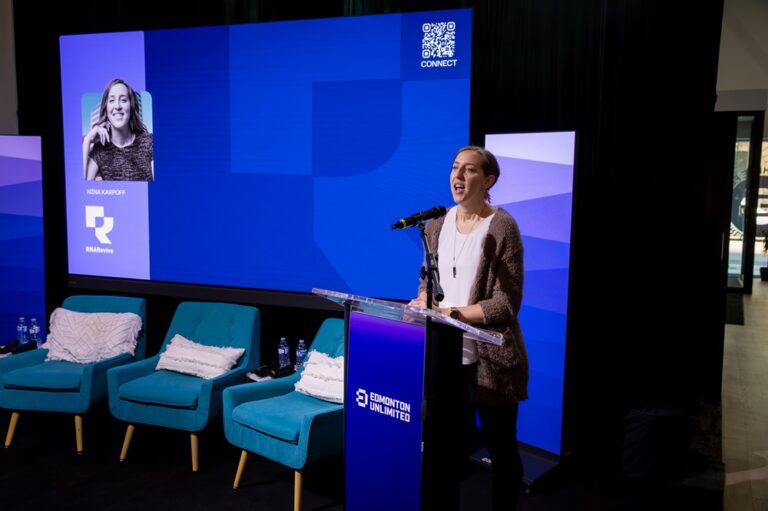
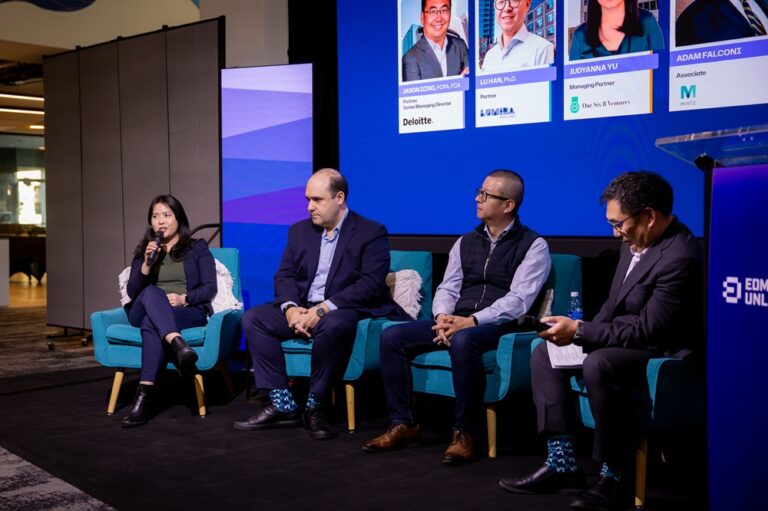
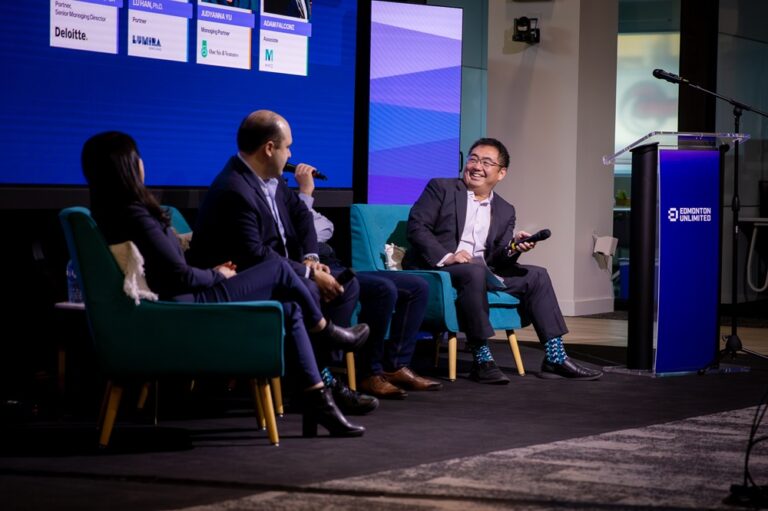
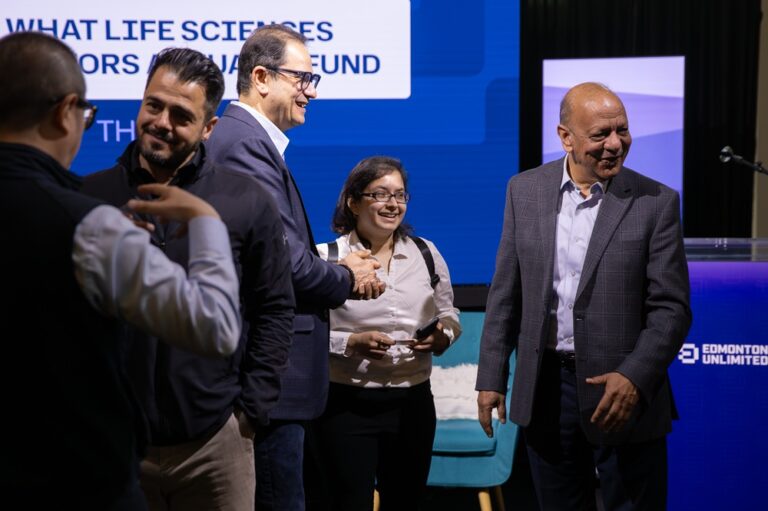
The space was packed with founders, operators, and ecosystem builders, all eager to better understand what actually goes into life sciences investment decisions.
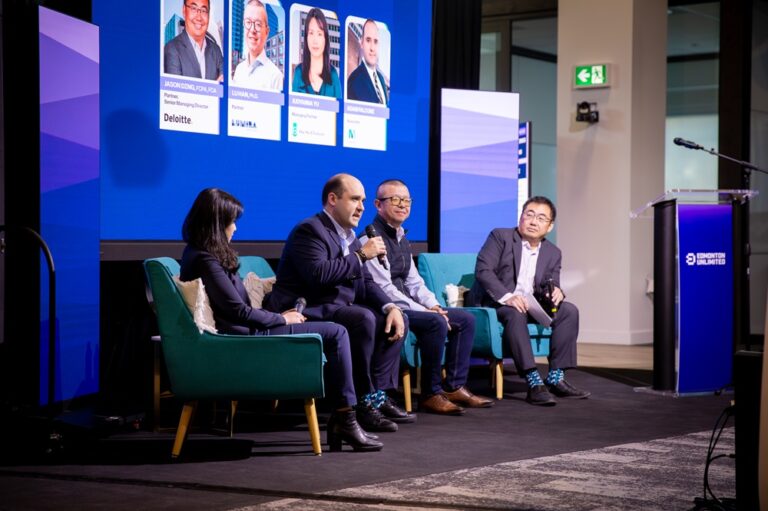
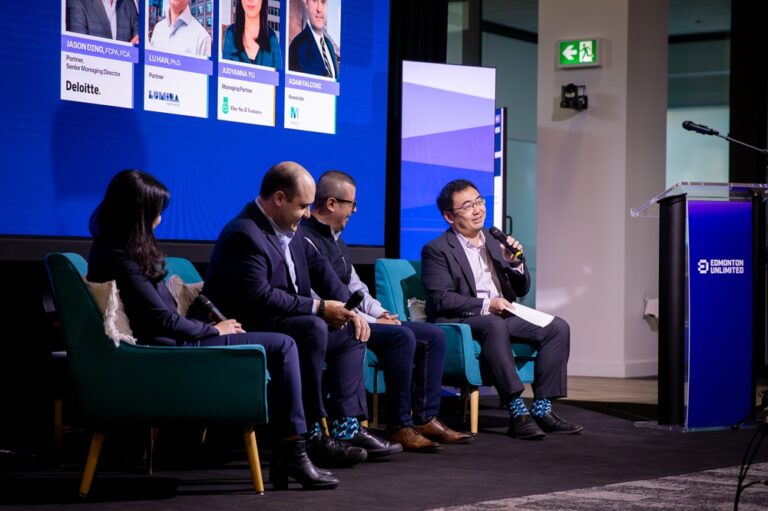
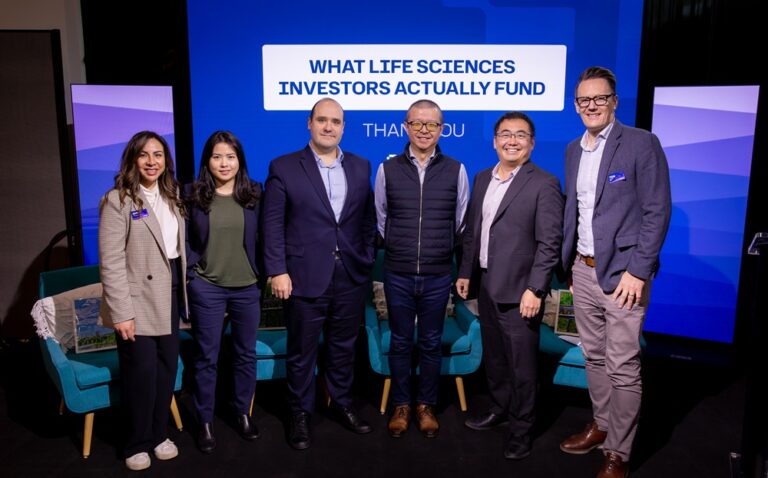
We were joined by Lu Han (Lumira Ventures), Judyanna Yu (One Six 8 Ventures), and Adam Falconi (Mintz LLP), with the conversation guided by Jason Ding (Deloitte), who brought both perspective and pace to the discussion.
One thing was clear early on: the past few years have shifted how investors operate.

What we heard from the panel
Lu Han
When investors are evaluating risk, they dive deep and consider factors like the:
- sector
- company stage
- market opportunity and risk
- strength and composition of the team
The scale of that filtering process is intense. Out of thousands of companies reviewed annually, only a handful make it through to investment.
Relationships with investors often start years before any funding conversation is on the table. Think early coffees, not pitch decks.
The takeaway? Spend time understanding how investors think, what they fund, and where you fit well before you’re actively raising.
Judyanna Yu
Preparedness through conversation and research is key, so investors can feel comfortable understanding how you’re going to solve each problem. To get your product approved, you need to have a general idea of what that may look like in clinics and what regulatory approval you’ll need. It’s more about showing that you understand the road ahead.
You don’t have to have a perfect answer, but you need to have an idea or at least a really strong team of people who’ve done it before.
For MedTech, in particular, they look at:
- technical feasibility
- clinical risk (including trial design and timelines)
- regulatory approval pathways
- reimbursement strategy
- commercial scale
One of the more candid moments was the reminder that excitement can fade quickly when going through due diligence if the fundamentals aren’t there.