
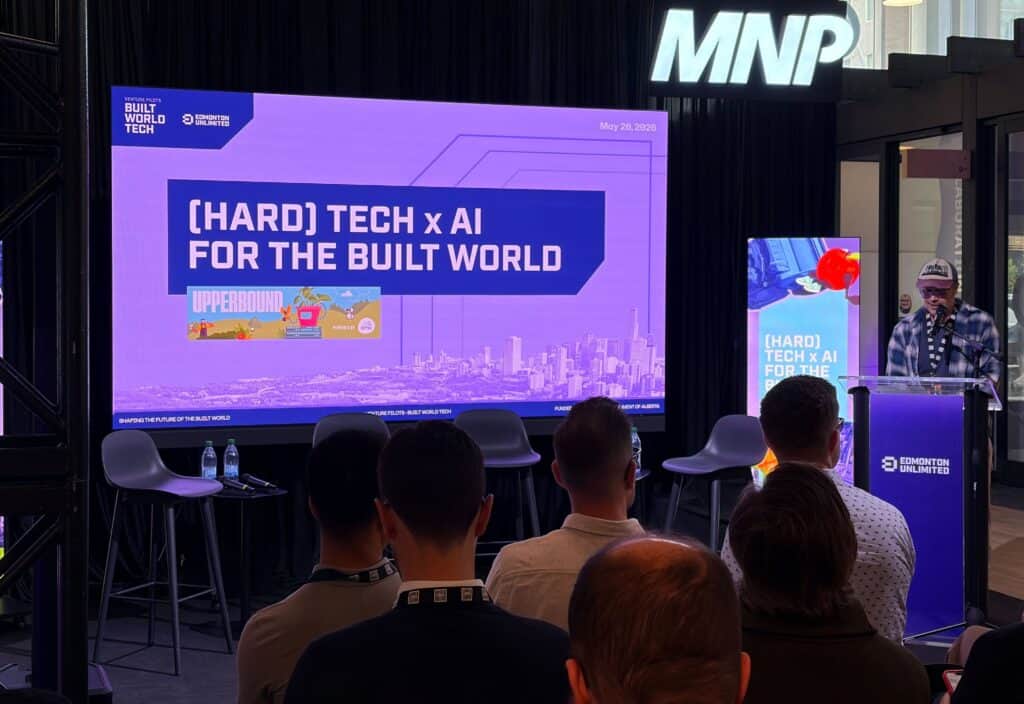
As conversations around AI continue to reshape industries globally, we saw an opportunity during Upper Bound to bring a critical conversation home: what does innovation actually look like when it moves beyond software and into the physical world?
That’s what sparked HardTech x AI for the Built World, a panel designed to connect our community with founders and operators building technologies for energy, infrastructure, advanced manufacturing, and industrial systems.
Because while AI often dominates headlines through apps and software, some of the most important innovations happening right now are taking place inside labs, manufacturing facilities, and industrial environments — where the path from idea to adoption is longer, riskier, and significantly more complex.
The room was packed with founders, researchers, operators, investors, and industry leaders, all digging into the same question: what does it really take to build physical technologies industries are willing to adopt, deploy, and scale?
The conversation featured Ji Ke (HAX/SOSV), Tom de Haas (Interface Fluidics), and Ryan Tucker (G2V Optics), who shared candid insights on commercialization, manufacturing realities, industrial partnerships, and why HardTech companies can’t afford to build in isolation.
And one thing became clear almost immediately: HardTech doesn’t move at software speed, but the pressure to learn, iterate, and prove value is just as intense.
What we heard from the panel
Acceleration is about compressing learning cycles: Ji Ke
For Ji Ke, scaling HardTech starts with one core challenge: shortening the gap between testing, failure, and learning.
Unlike software startups, hardware companies can’t simply push updates overnight. Every iteration involves manufacturing, materials, testing, supply chains, and physical systems — meaning mistakes are expensive in both time and capital.
That’s why HAX focuses heavily on accelerating development cycles and validating ideas faster through:
- rapid prototyping and testing
- close collaboration between engineers and founders
- access to manufacturing and technical expertise
- learning from failure before scaling
- creating environments where experimentation happens constantly
Ke emphasized the importance of companies solving problems collaboratively rather than independently.
And yes, sometimes that process literally involves things catching fire. (You want those things to happen in your facilities rather than on customer sites.)
Clearly communicate what you’re building: Tom de Haas
For Interface Fluidics, commercial traction came through years of validation, industry partnerships, and proving the technology in real-world environments.
De Haas spoke about how HardTech founders need to think beyond the prototype stage much earlier than many expect.
Industry adoption often depends on factors like:
- technical validation and published research
- long-term customer trust
- deployment readiness
- relationships with established industry players
He also highlighted how accelerator programs helped sharpen the company’s ability to communicate value clearly — not only to investors, but to customers and partners who needed to understand exactly why the technology mattered in practical terms.
Because in HardTech, being technically right isn’t always enough. People still need to understand the problem you solve and why it matters.
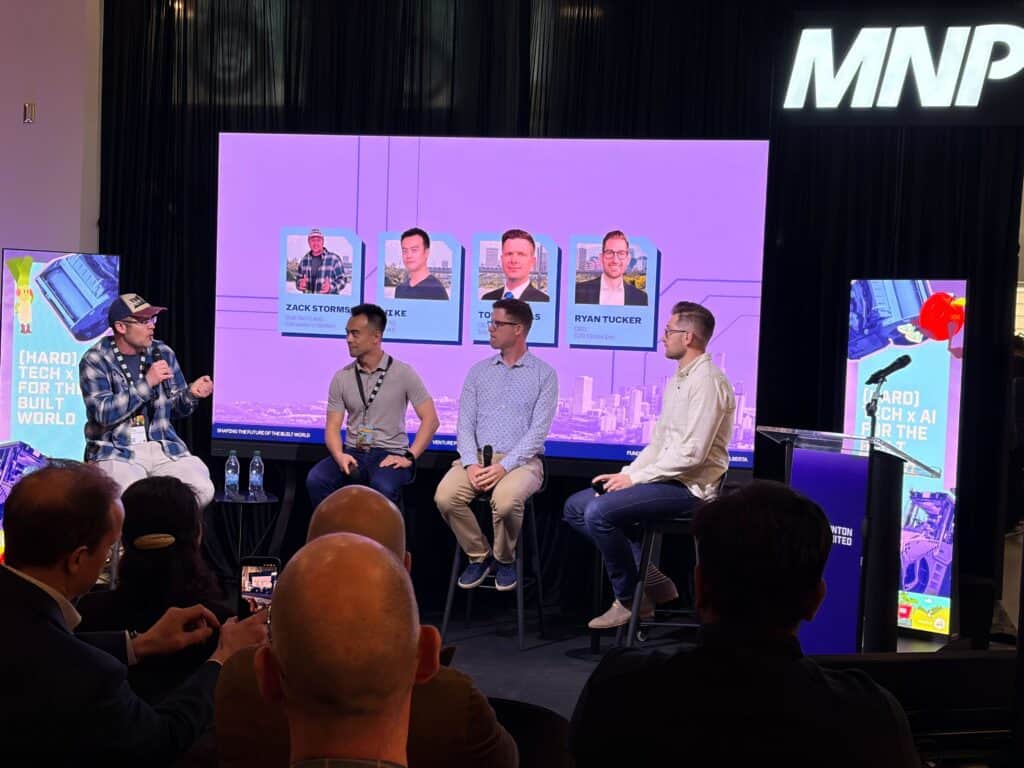
Scaling means navigating human systems too: Ryan Tucker
For Edmonton-based G2V Optics, scaling breakthrough technology meant learning how to navigate organizational systems just as much as technical ones.
Tucker shared how getting new technologies adopted inside large organizations often depends on finding internal champions willing to advocate for change — a process that can take years.
He emphasized the importance of building credibility early through industry relationships, technical partnerships, and third-party validation.
For many HardTech startups, that means thinking early about:
- manufacturing scalability
- supply chain realities
- procurement timelines
- technical standards and validation
One of the strongest themes throughout the evening was how often founders underestimate the complexity of scaling beyond the lab. A prototype working in controlled conditions is one thing, but deploying technology commercially, reliably, and at scale is something entirely different.
Building the future of the built world in Edmonton
Edmonton’s HardTech ecosystem continues to evolve, but conversations like this reinforce something important: the appetite for collaboration between founders, industry, researchers, and investors is growing quickly.
That’s exactly why Edmonton Unlimited launched Venture Pilots: Built World Tech earlier this year. It’s a program focused on helping companies that are building for infrastructure, construction, energy, and industrial systems navigate the path from innovation to adoption.
Because scaling HardTech takes more than great technology. It takes partnerships, testing environments, industry connections, and ecosystems willing to build together.
Judging by how long the conversations continued after the panel wrapped, Edmonton is ready for more of it.
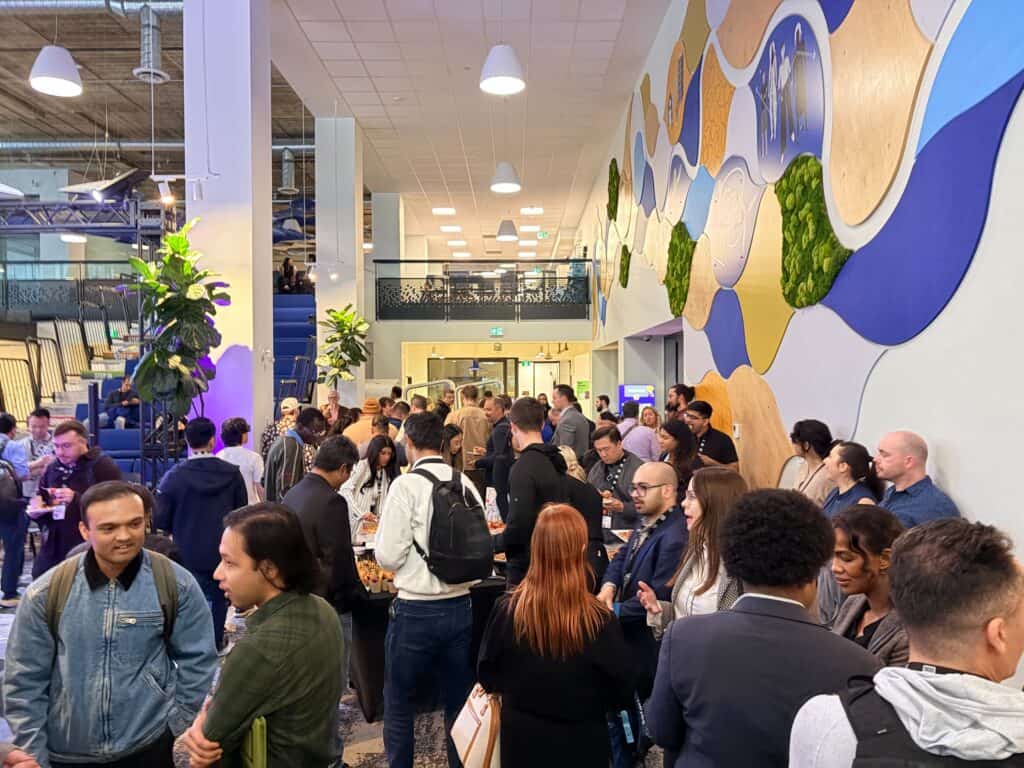
People convened at Edmonton Unlimited for HardTech x AI for the Built World on Wednesday, May 20, 2026.