
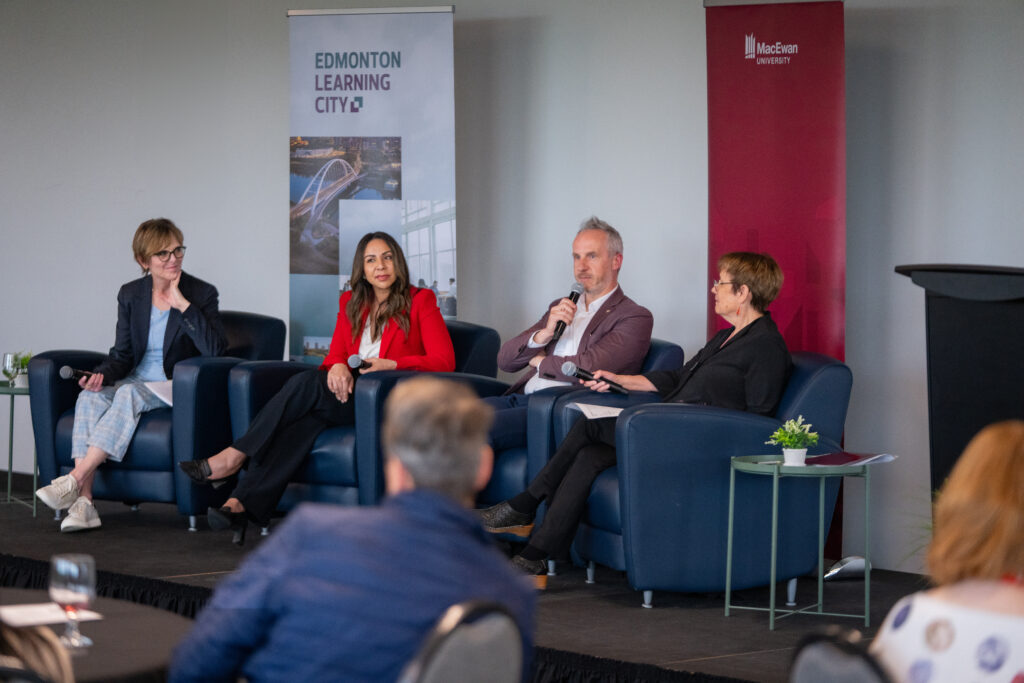
Municipal leaders from across Canada gathered at MacEwan University during the Federation of Canadian Municipalities Conference to explore Edmonton’s experience as Canada’s first UNESCO Learning City.
The discussion brought together perspectives from the City of Edmonton, MacEwan University, Edmonton Public Library, Qualico Canada, and Edmonton Unlimited to examine how learning contributes to economic development, talent attraction, community building, and long-term prosperity.
What emerged was a broader view of learning—one that extends beyond educational institutions and recognizes learning as a driver of opportunity. A founder building a company, a newcomer developing new skills, a researcher bringing innovation to market, and a professional adapting to changing technologies are all part of the same story.
For cities looking to strengthen their economies and improve quality of life, the message was clear: investing in learning means investing in people.
Learning as an Economic Development Strategy
For municipal leaders, one of the most important takeaways was that learning should not be viewed separately from economic development.
Every entrepreneur building a company, every researcher commercializing an innovation, and every professional adapting to new technologies is participating in a city’s learning ecosystem. Communities that invest in learning are investing in talent, innovation, workforce resilience, and long-term growth.
This is especially important as cities compete for people, ideas, investment, and opportunity.
A Learning City is not only about education. It is about creating the conditions for people to build skills, solve problems, start companies, strengthen communities, and contribute to a more resilient economy.
The discussion reinforced that economic development does not happen in isolation. It depends on people having access to opportunities to learn, connect, and participate. The stronger those opportunities are, the stronger a city’s capacity for innovation and growth becomes.
Creating a Garden of Opportunity
Learning does not start and stop with formal education.
Across a city, people are constantly building new skills, adapting to change, and pursuing new opportunities. That happens in classrooms, but it also happens in libraries, workplaces, community spaces, and the everyday interactions that shape how people participate in community life.
For cities, the challenge is not simply supporting formal learning. It is creating what one panelist described as a “garden of opportunity”—an environment where people can access the resources, relationships, and experiences that help them grow throughout their lives.
Not everyone starts from the same place. Some people are launching businesses. Others are entering a new workforce, navigating a new community, or developing skills that will help them adapt to a changing economy. A strong Learning City recognizes those different starting points and creates multiple pathways for people to learn, contribute, and succeed.
That requires collaboration across sectors. Municipalities, post-secondaries, libraries, employers, developers, community organizations, and innovation partners all have a role to play in creating the conditions for opportunity.
When those conditions exist, the benefits extend beyond learning itself. Cities develop stronger talent pipelines, more resilient workforces, and communities that are better positioned to respond to change and seize new opportunities.
Important Takeaways
- Learning doesn’t only happen in classrooms.
- Public spaces are powerful enablers of learning and belonging.
- Learning and economic development are deeply connected.
- Removing barriers to participation unlocks talent and opportunity.
- Strong partnerships create stronger learning ecosystems.
- Today’s learning opportunities become tomorrow’s growth and resilience.
Looking Ahead
For Edmonton, the Learning City designation is more than a recognition. It reflects an ongoing commitment to creating opportunities for people to learn, grow, and succeed.
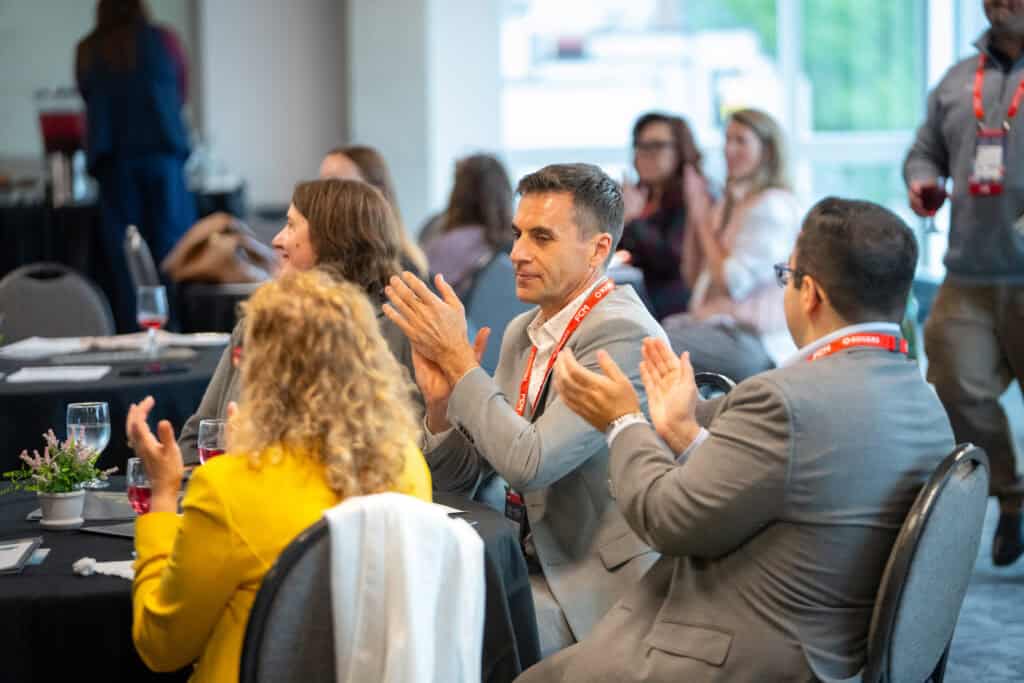
The discussion offered practical insights for municipalities looking to strengthen their own communities. Cities have a role to play in creating spaces for learning, removing barriers to participation, connecting partners, and creating pathways to opportunity.
The results may not always be immediate, but they compound over time. Today’s learning opportunities become tomorrow’s talent, ideas, businesses, and community leaders.
Those are the green shoots that help cities thrive.
About Learning Cities
Learning Cities are communities that invest in lifelong learning as a driver of talent, innovation, inclusion, and economic resilience. Through UNESCO’s Global Network of Learning Cities, members share ideas and practices that help people develop the skills and knowledge needed to thrive in a changing world. Edmonton joined the network as Canada’s first UNESCO Learning City in 2022, recognizing the city’s long-standing commitment to learning as a catalyst for individual and community success.